
The result in this paper undercuts the major applications of the Kaldor-Hicks reasoning in the standard Chicago school (wealth maximization) of law and economics, cost–benefit analysis, policy analysis, and related parts of applied welfare economics.
Wall Street Capitalism as “The Model” for Market Economies
December 13, 2012 by

This paper addresses the way the American “Wall Street Capitalism” embodies the irresponsible disconnect between action and the results that markets (unlike governments) are supposed to prevent. This paper is in the Slovene journal Theory and Practice that dates back to 1964.
Marxism as a Capitalist Tool
December 13, 2012 by

The Great Debate between capitalism and socialism is now in the dustbin of intellectual history, but Marxism still plays an important role in sustaining the misframing of the questions so that the defenders of the present employment system do not have to face the real questions that separate that system from a system of economic democracy. In that sense, Marxism has become the ultimate capitalist tool.
Introduction to Property Theory
December 12, 2012 by
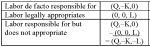
This is yet another unpublished paper to introduce property theory to various audiences, particularly economists.
The Libertarian Case for Slavery: A Note on Nozick
December 12, 2012 by

This is a historically important paper, by one “J. Philmore,” arguing along with Robert Nozick from a free-market libertarian viewpoint that the self-sale contract and the current employment or self-rental contract are on the same moral footing.
The Market Mechanism of Appropriation
December 12, 2012 by

This is a non-mathematical treatment of the fundamental theorem about the laissez faire mechanism for property appropriation.
Hume Implies Locke: Fundamental Theorem of Property Theory
December 12, 2012 by
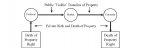
The fundamental theorem for the invisible hand mechanism in the property system is that if Hume’s conditions are satisfied, then the invisible judge imputes in accordance with the Lockean responsibility principle. The paper mathematically formulates and proves the theorem using vector flows on graphs.
On the Role of Capital in “Capitalist” and in Labor-Managed Firms
December 10, 2012 by
This paper outlines the “fundamental myth” about the structure of property rights in a capitalist economy, namely the idea that being the residual claimant in a productive opportunity is part of a bundle of property rights known as the “ownership of the firm.” Residual claimancy is contractually determined so there is no such “ownership.” The fundamental myth exposes a basic fallacy in capital theory that has hitherto escaped attention in the capital theory debates. (Reprint from: Review of Radical Political Economics, Winter 2007)
Rethinking Common vs. Private Property
August 14, 2012 by
The purpose of this paper is to suggest a rethinking of the common-versus-private framing of the property rights issue in the Commons Movement. The underlying normative principle we will use is simply the basic juridical principle that people should be legally responsible for the (positive and negative) results of their actions, i.e., that legal or de jure responsibility should be imputed in accordance with de facto responsibility. In the context of property rights, the responsibility principle is the old idea that property should be founded on people getting the (positive or negative) fruits of their labor, which is variously called the labor or natural rights theory of property.